Meet Makhana
Makhana, also known as fox nut or gorgon nut, is an aquatic crop scientifically known as Euryale ferox, belonging to the Nymphaeaceae family. Deeply rooted in Indian food traditions and natural wellness systems, makhana has been valued for centuries as a nourishing and wholesome food. The name Makhana is derived from the Hindi words “Makh – ann”, meaning pure and satvik food. This origin reflects its long standing cultural importance as a clean, spiritually pure and naturally nourishing ingredient. Naturally rich in carbohydrates, plant protein, dietary fiber and essential minerals, makhana is low in fat and easy to digest. It is widely recognized in Ayurveda and Unani systems of medicine for its antioxidant and therapeutic properties and has traditionally been used to support digestion, kidney health and overall vitality. Makhana thrives in tropical and subtropical climates. India is the world’s leading producer, contributing nearly 80 percent of global production. Within India, Bihar dominates commercial cultivation, accounting for more than 90 percent of national output. Key producing districts include Darbhanga, Madhubani, Saharsa, Supaul, Purnia, Katihar, Kishanganj and Sitamarhi. Beyond India, makhana is also cultivated in countries such as China, Japan, Thailand, Nepal and Bangladesh. In recent years, growing awareness of makhana as a natural superfood has driven increasing demand across international markets. Makhana has been granted Geographical Indication status as Mithila Makhana, strengthening its identity and supporting quality recognition and export potential. Traditionally sold with minimal processing, makhana now holds strong promise for value addition through modern processing, innovative food formats and premium healthy snack applications.
The makhana sector plays an important role in supporting farming and fishing communities, particularly in North Bihar, where thousands of families depend directly or indirectly on its cultivation and processing. With improved farming techniques, organized supply chains, and better storage and distribution systems, makhana has the potential to become a powerful driver of rural income and sustainable agriculture. Today, makhana represents a rare combination of ancient heritage and modern nutrition. From traditional kitchens to contemporary health-conscious consumers worldwide, it continues to gain recognition as a pure, functional, and culturally significant superfood.

Nutritional Profile
● Makhana is naturally rich in complex carbohydrates, plant-based protein, dietary fiber, and essential minerals such as calcium, magnesium, and potassium. It is low in fat and easy to digest, making it an excellent choice for daily consumption and balanced nutrition.
● It is also naturally gluten-free, making it a safe and suitable snack option for individuals with gluten sensitivity or celiac conditions, while supporting a clean and healthy lifestyle.
Benefits of Makhana
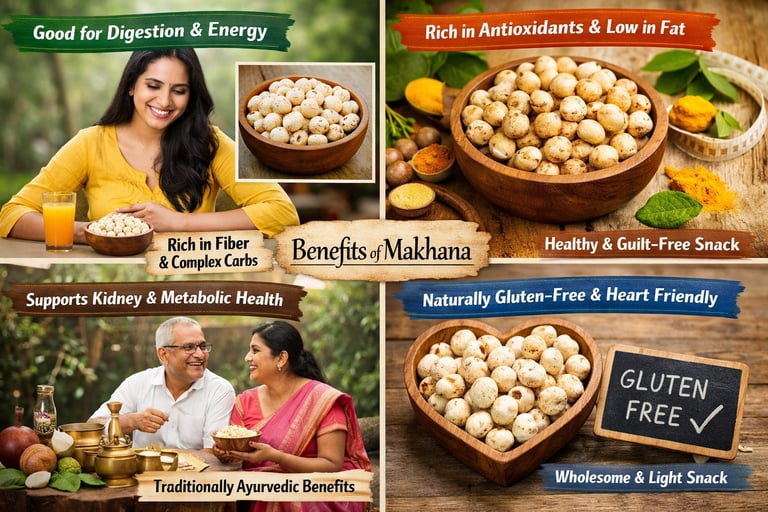
● Supports digestive health due to its high dietary fiber content, promoting better gut function and overall digestive comfort.
● Helps maintain steady energy levels with its complex carbohydrates, making it a great snack for sustained nourishment.
● Rich in natural antioxidants that help support overall wellness and protect the body from oxidative stress.
● Low in fat and suitable for weight-conscious diets, making it a smart alternative to fried and processed snacks.
● Naturally gluten-free and light on the stomach, ideal for individuals with gluten sensitivity or those seeking easily digestible foods.
● Traditionally valued for supporting kidney function and metabolic health in Ayurveda and other natural wellness systems.
● Supports heart-friendly eating when prepared with minimal oil, contributing to a balanced and mindful diet.
● Ideal for clean-label and natural food products, aligning with modern consumer demand for simple, wholesome ingredients.

Who can consume Makhana
● Children who need a healthy and nutritious snacking option
● Adults looking for nutritious and low fat food choices
● Elderly individuals because makhana is light and easy to digest
● Fitness enthusiasts and yoga practitioners seeking natural energy snacks
● People following gluten free diets
● Vegetarians and plant based consumers
● Individuals observing fasting or satvik diets
● People managing diabetes when consumed in moderation and without added sugar 🌿
Side effects and allergic factors
Makhana is generally safe for most people when consumed in normal quantities and is widely considered a healthy snack. However, eating it in excessive amounts may sometimes lead to bloating or constipation because of its high fiber content. People who have sensitivities to seeds or nuts should try small quantities first to check their tolerance. In rare cases, some individuals may experience mild allergic reactions such as itching or stomach discomfort. Pregnant women or individuals with specific medical conditions should consult a healthcare professional before including makhana regularly in their diet.
Follow us
support@nutram.store


is a registered brand of AAA Energytech LLP